Not Just Conferences: Online Workshops, Seminars, Colloquia, etc.

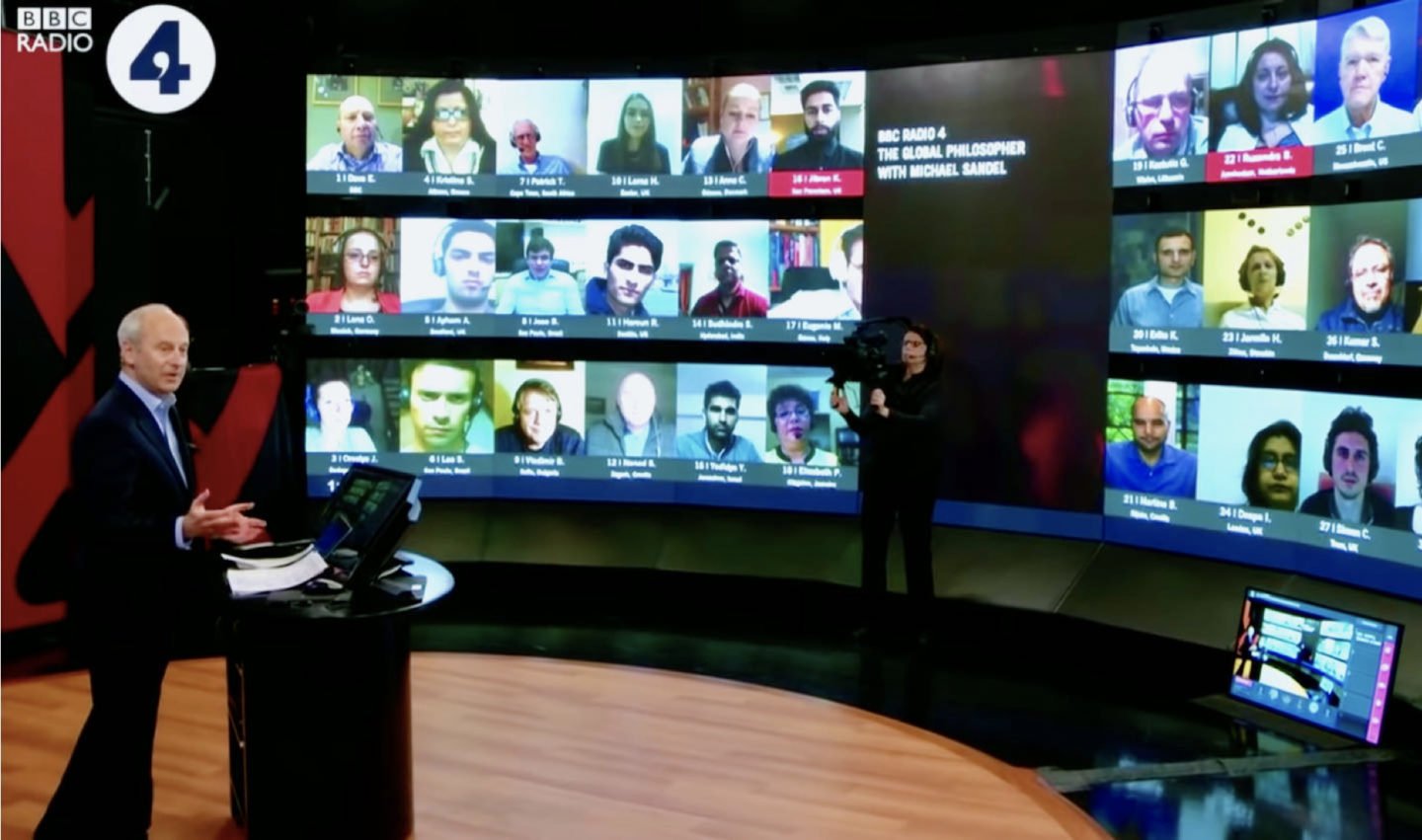
The Brains blog started in 2005. By 2006, Thomas Nadelhoffer had organized the first Online Philosophy Conference, featuring papers and commentaries from well-known figures in the field. By 2009, Richard Brown was organizing Consciousness Online, complete with video presentations and commentaries. It took over a decade and a pandemic to …

Continuing the Case for Online Conferences

By Rose Trappes and TJ Perkins With the optimism about the unprecedented development and distribution of a vaccine comes the hope for a return to normal. For many philosophers, this includes a desire to travel to attend conferences. But a return to in-person conferences doesn’t leave everyone jumping with joy. …

Consciousness, Computation, and Cognition

Much cognitive processing is unconscious, but some is conscious. By ‘consciousness,’ I mean phenomenal consciousness, conscious experience, what it’s like to be someone, or qualia. The relation between consciousness, computation, and cognition is a very difficult question. The two main traditional views are functionalism and the identity theory. According to …

Neural Representations Are Observable, and Neural Computation Is Sui Generis

The received view in the philosophy of cognitive science is that cognition is (largely explained by) a kind of digital computation, and computation requires representation. Therefore, if neurocognitive systems are computational, they manipulate digital representations of some sort. According to this received view, representations are unobservable entities posited by successful …

The Computational Theory of Cognition: From Turing Machines to Neurocognitive Mechanisms

The modern computational theory of cognition began after Alan Turing (1936) published his mathematical theory of computation in terms of what are now known as Turing machines. Contrary to a popular misconception, however, it wasn’t Turing who turned his machines into a model of cognition. That step was taken by …

Teleological Functions: Fixing the Goal-Contribution Account

In my previous post, I mentioned that mechanistic explanations are functional. What I mean by that is that mechanisms and their component parts have functions and such functions contribute to mechanistic explanation because, by performing their functions, components contribute to the activities of the whole mechanism. The notion of function …

Back to Top