Collaborative Gestures in Embodied Math Learning Games

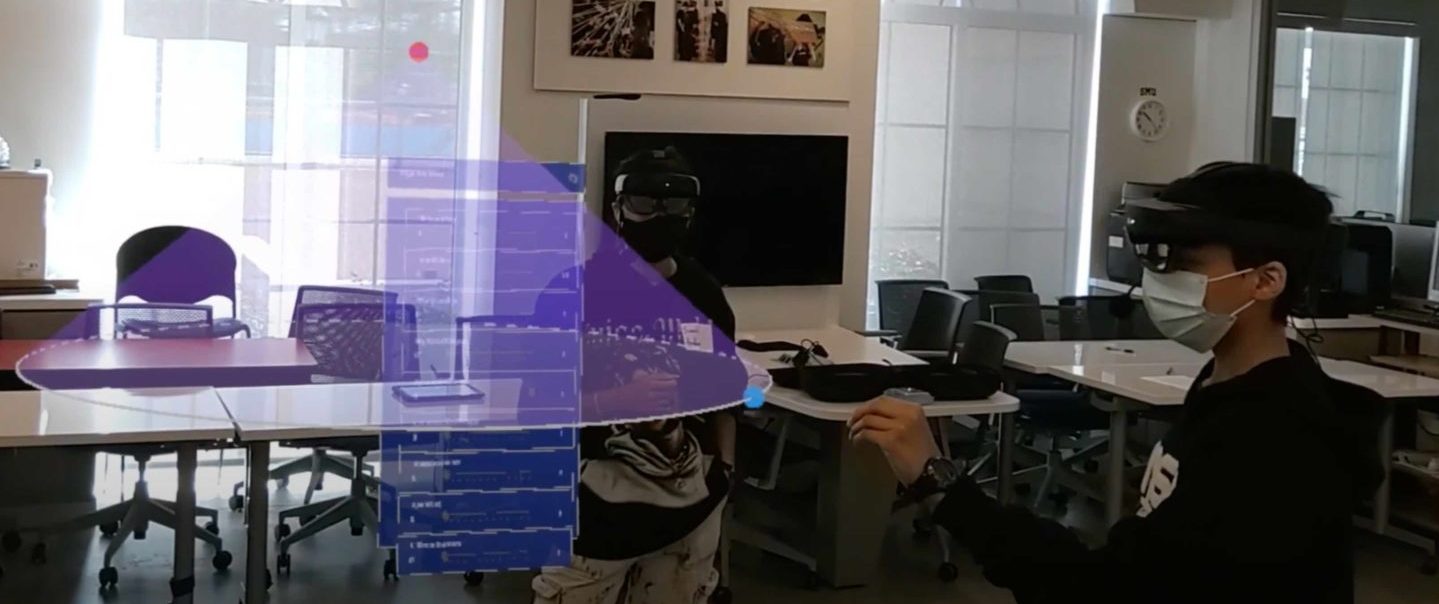
Math teachers use gestures when confronting math problems. For example, a teacher might gesture a geometric shape with their hands, and other teachers might echo this same gesture with their hands. Or a teacher might propose a rotation of a shape using a sweeping around hand gesture, and another teacher …

Now Featured—Movement Matters: How Embodied Cognition Informs Teaching and Learning

Cognitive psychology has undergone a paradigm shift in the ways we understand how knowledge is acquired – away from brain-bound models towards an embodied view. Learning occurs through the body and is grounded in both perception and action. That is, cognition is deeply dependent upon the learner’s physical experiences.  Embodied learning shifts the …

Deep South Philosophy of Neuroscience Workgroup: APA event and Call for Abstracts

Hi All, The DSPNW is hosting an exciting event this week at the Pacific APA in Vancouver, “Philosophy and Neuroscience Graduate Student Showcase I”! See the lineup here! Also, the Call for Abstracts for September’s “Philosophy of Neuroscience at the Gulf V” is now live! View the CFA here! We …

Discussing Richard Nisbett’s Thinking: A Memoir — X-Phi, Culture, Introspection, IQ, Guns, Class, and Academia

You have surely heard about cultural differences in reasoning, how people can fabricate reasons when asked to explain one of their decisions, and how many people seem systematically susceptible to reasoning errors. Much of this research was contributed by Richard Nisbett and their colleagues. Dr. Nisbett was kind enough to …

Back to Top