
Manipulatives Matter
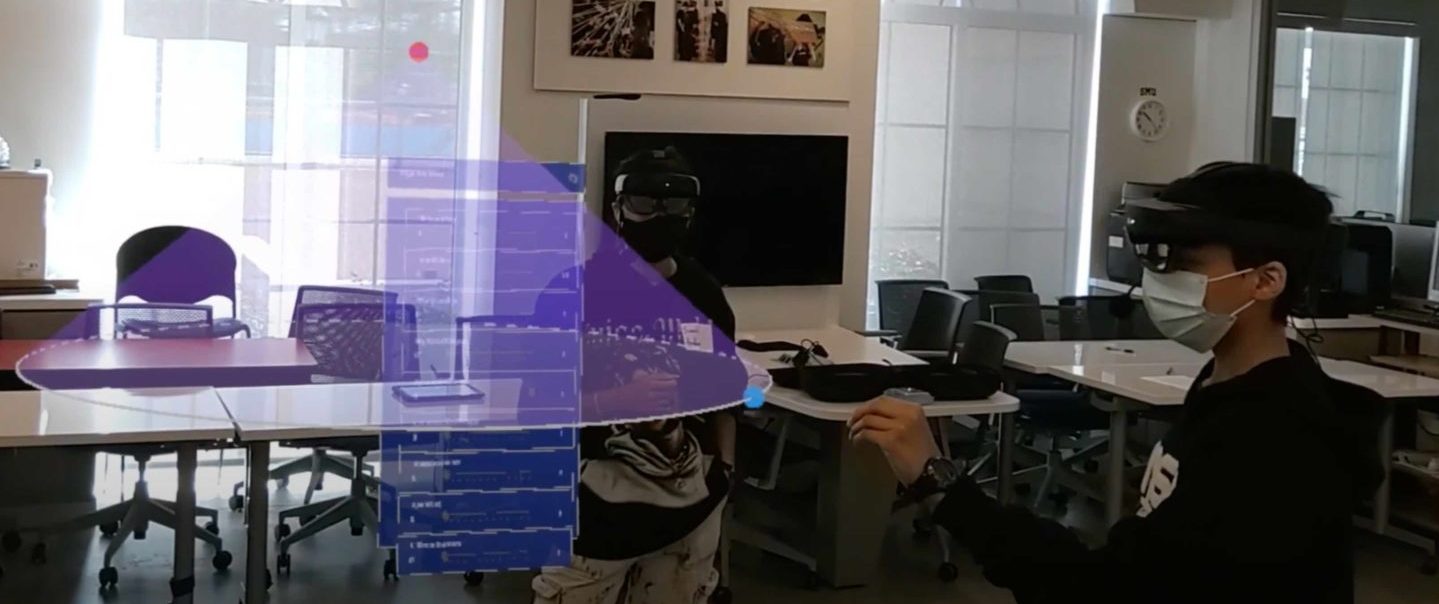
Is it true that “Movement Matters” for learning? We focus on how people learn with manipulatives, which are physical objects that can be used to represent concepts.
Is it true that “Movement Matters” for learning? We focus on how people learn with manipulatives, which are physical objects that can be used to represent concepts.
Math teachers use gestures when confronting math problems. For example, a teacher might gesture a geometric shape with their hands, and other teachers might echo this same gesture with their hands. Or a teacher might propose a rotation of a shape using a sweeping around hand gesture, and another teacher …
Consider the many ways you might teach a child to do something new, like how to turn off the faucet after they are done washing their hands. Perhaps you tell them to turn the knob to the right, as far as it’ll go, until no more water is dripping from …
Cognitive psychology has undergone a paradigm shift in the ways we understand how knowledge is acquired – away from brain-bound models towards an embodied view. Learning occurs through the body and is grounded in both perception and action. That is, cognition is deeply dependent upon the learner’s physical experiences. Embodied learning shifts the …
In Chapter 1 of Causation with a Human Face, James Woodward articulates the metaphilosophical outlook on causation that gives his book its title. He tells us that his aim is to articulate a normative theory about how human beings ought to engage in causal reasoning. However, he believes that when …
James Woodward’s Causation with a Human Face defends three methodological proposals: (I) The empirical study of causal reasoning can fruitfully inform the philosophical analysis of causation, and vice versa. (II) Philosophers should attend to distinctions among different kinds of causal relationship, and not just the distinction between causal and non-causal relationships. (III) …
The notion of proportionality was introduced into the philosophical literature by Yablo 1992. To use one of his examples, consider a pigeon, Sophie, who has been trained to peck at red and only red targets. Suppose Sophie is presented with a scarlet target and pecks. Contrast the following two claims (1) …