
We are grateful to Susanna Schellenberg for blogging this week on her book The Unity of Perception: Content, Consciousness, Evidence, forthcoming in July 2018 from Oxford University Press. To view all her posts on a single page, please click here.
[The following is a guest post by the organizers of Neural Mechanisms Online. — JS] Neural Mechanisms Online 2018 is a cycle of webinars (i.e. web seminars) on the philosophy of neuroscience. The speakers are several philosophers from all around the world, either junior or senior (see the calendar). The …
Many thanks to John Schwenkler for running the Brains blog and for inviting me to guest blog this week about my new book The Unity of Perception: Content, Consciousness, Evidence (Oxford: Oxford University Press, 2018). Perception is our key to the world. It plays at least three different roles in …
We are grateful to Susanna Schellenberg for blogging this week on her book The Unity of Perception: Content, Consciousness, Evidence, forthcoming in July 2018 from Oxford University Press. To view all her posts on a single page, please click here.
We are delighted to announce that the 2018 Summer Institute on Bounded Rationality will take place on June 19 – 27, 2018, at the Max Planck Institute for Human Development in Berlin, Germany. The Summer Institute brings together talented young researchers and renowned scientists from around the globe and aims to …
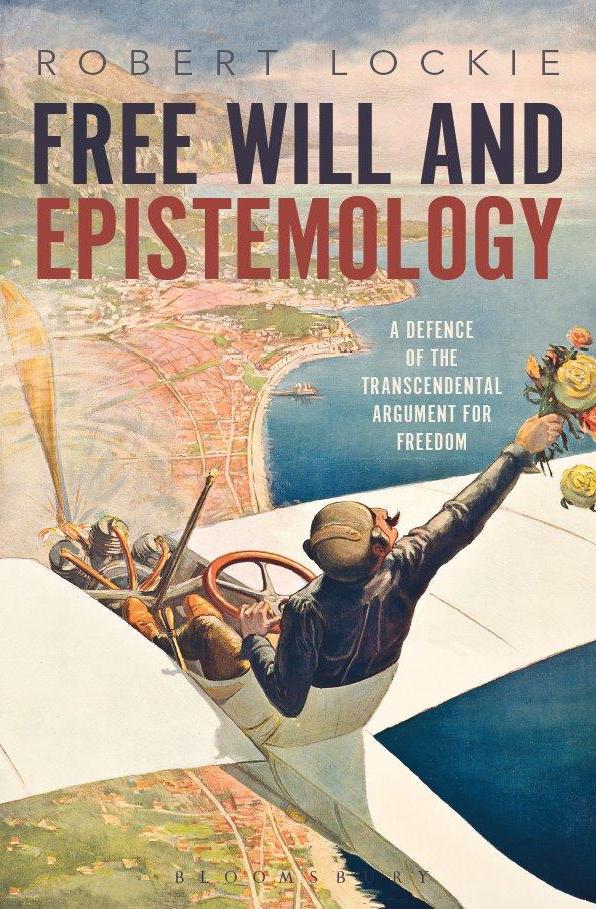
[The following is a guest post by Bob Lockie. — JS] He who says that all things happen of necessity can hardly find fault with one who denies that all happens by necessity; for on his own theory this very argument is voiced by necessity (Epicurus 1964: XL). Epicurus’s famous …
York University, Toronto May 10-11, 2018 When we perceive, we employ perceptual capacities by means of which we discriminate particulars in our environment. When we see the red shade of an apple we employ our capacity to discriminate red from other colors. More generally, we might say that to be …
Australasian Society for Philosophy and Psychology Call For Symposia And Papers 1st Annual Meeting December 5-7, 2018 Sydney, Australia The Australasian Society for Philosophy and Psychology invites proposals for symposia and papers for its first annual meeting, to be held in Sydney, 5-7 December 2018. Submissions are open to anyone with …