




We are grateful to Paul Humphreys (University of Virginia) for blogging this week on his book Emergence, new from Oxford University Press. To view all his posts on a single page, click here.
Welcome to our fourth Ergo symposium, featuring Pendaran Roberts (University of Warwick), Keith Allen (University of York), and Kelly-Ann Schmidtke’s (University of Warwick) “Folk Intuitions about the Causal Theory of Perception” with commentaries by Eugen Fischer (University of East Anglia) and John Schwenkler (Florida State University). I’d like to thank …
Conceptual emergence occurs when, in order to understand or effectively represent some phenomenon, a different representational apparatus must be introduced at the current working level. Such changes in representation are common in the sciences but it has usually been considered in connection with changes in synchronic representations. Here, I’ll consider …
Today’s entry addresses a type of argument that will be familiar to most of you, the argument that all higher level natural facts in our world logically supervene on the fundamental physical facts.[1] Consider a very simple world, which we can call Checkers World. It behaves exactly like a game …
Yesterday we saw, via an example from social psychology, that diachronic approaches to emergence can avoid some of the major problems of synchronic approaches. That motivating example is not wholly convincing as an example of transformational emergence. Here is what I believe is a more robustly ontological example. The Standard …
I thank the editors of the Brains Blog for extending this invitation, despite the fact that I am not an expert in neuroscience and related areas of philosophy. This week I am going to present a friendly challenge to the readers by arguing that the emphasis on synchronic approaches to …
We are grateful to Paul Humphreys (University of Virginia) for blogging this week on his book Emergence, new from Oxford University Press. To view all his posts on a single page, click here.
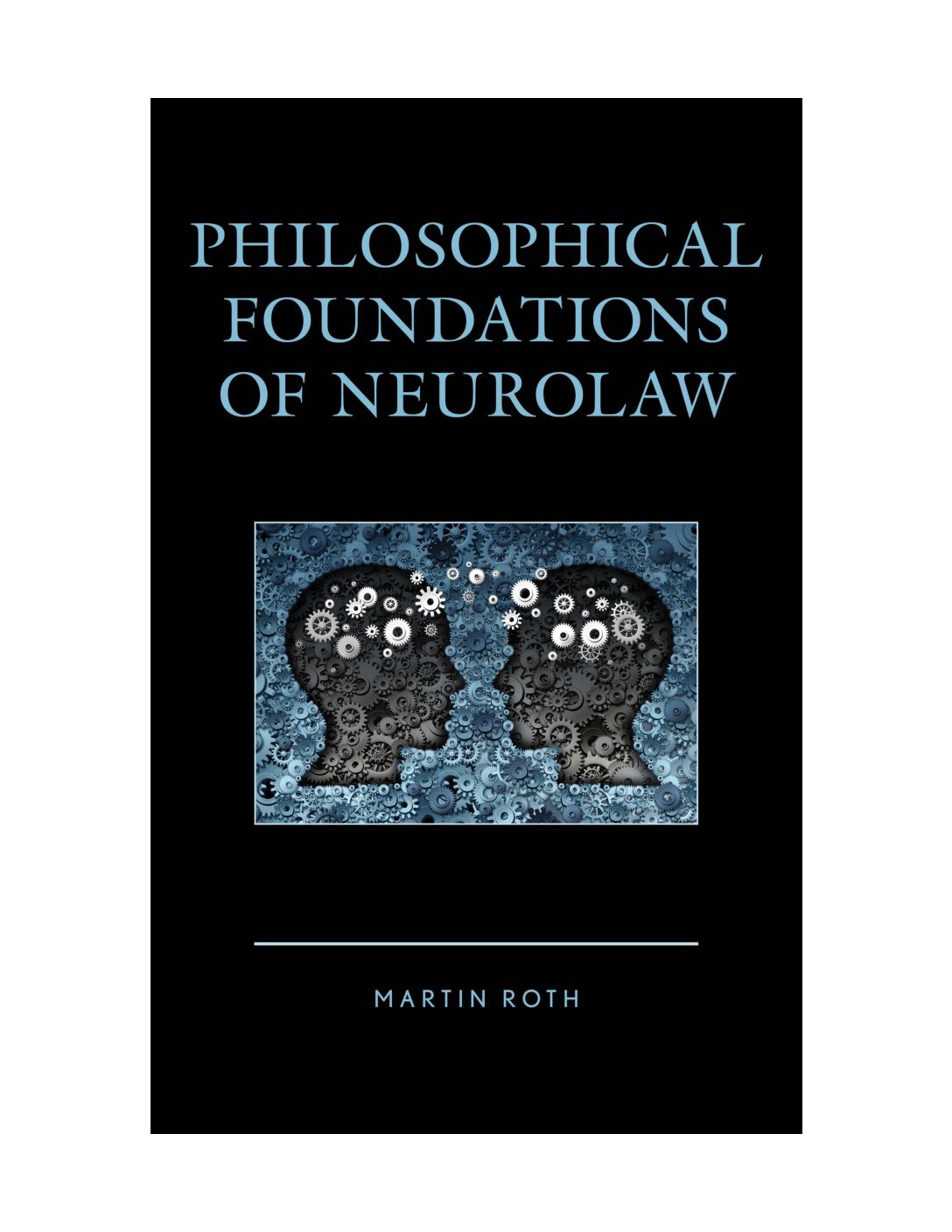
Another book that may be of interest to The Brains Blog community is my Philosophical Foundations of Neurolaw, which is coming out next month. A major aim of the book is to provide an alternative to Michael Pardo and Dennis Patterson’s treatment of issues in the philosophy of mind and …