Surfing Uncertainty: Prediction, Action, and the Embodied Mind
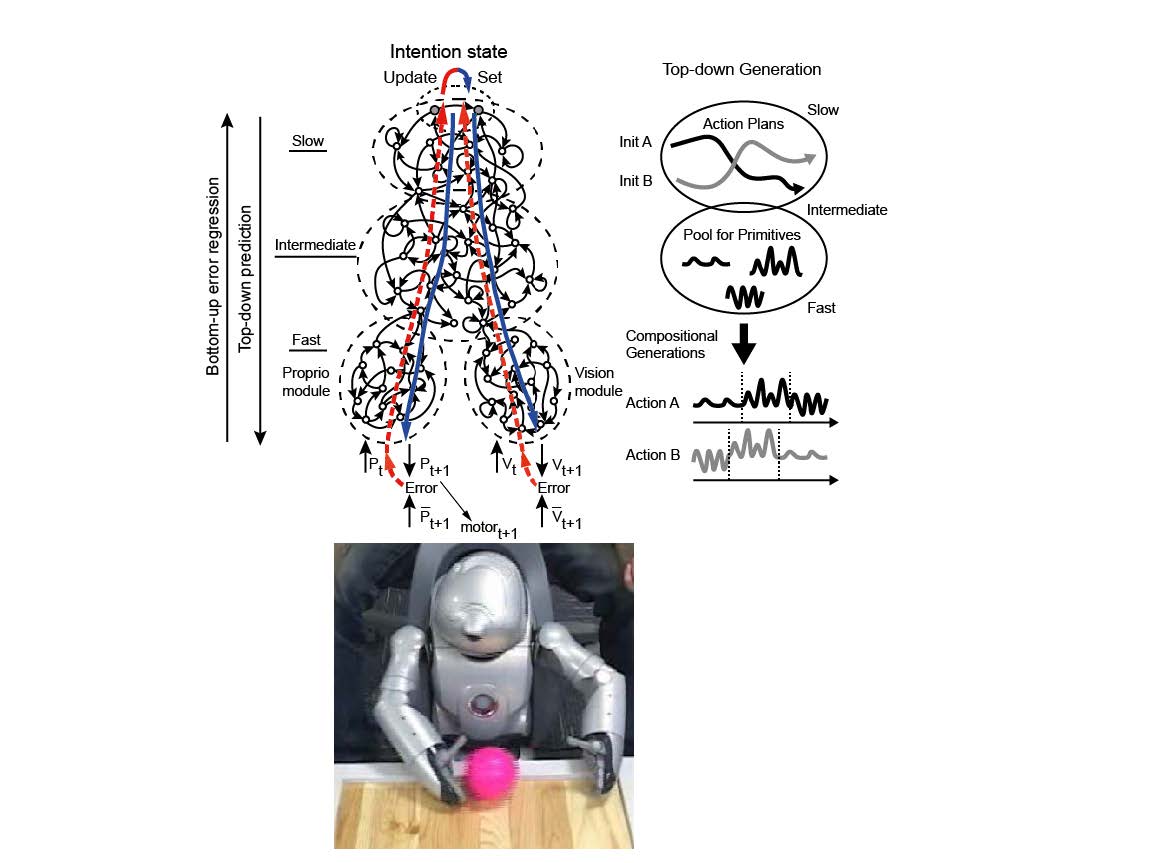
Thanks to John Schwenkler for the invitation to guest-blog this week about my new book Surfing Uncertainty: Prediction, Action, and the Embodied Mind (Oxford University Press NY, 2016).
Sonya Bahar and I have recently contributed to a large volume collecting arguments against the afterlife, edited by Michael Martin and Keith Augustine. William Hasker just reviewed it for NDPR. IMHO the review is not up to the usual NDPR standards. Hasker dismisses the portion of the volume where our essay …
Imperativism works well for sprained ankles. Pains are a diverse bunch, though, and pain science presents a number of interesting cases. Much of my book is taken up with defusing potential counterexamples. These fall into three classes, which I’ll take in order of seriousness.
Over the past two days, I’ve sketched a picture of pains. Pains are imperatives which express commands which, when obeyed, motivate you to solve problems pertaining to bodily integrity. That fits nicely with a broad story about the bodily sensations and their role. You might think this is missing something …
Yesterday I gave a broad outline of the view in my book. But why be an imperativist? I came to imperativism via reflection on the biological function of pain. Most accounts treat pain as a signal of damage. That has always seemed wrong to me — both false to experience and …
Thanks to John Schwenkler for the invitation to guest-blog this week about my book What the Body Commands: The Imperative Theory of Pain (MIT Press 2015). My book is devoted to defending pure imperativism about pains. Imperativism is the claim that pains are akin to imperatives in ordinary language.
The argument from fineness of grain is probably the most discussed argument for nonconceptualism. (To name but a few discussants: Peacocke 1998, 2001a, 2001b; McDowell 1994, 1998, Brewer 1999, 2005, Tye 2005, Coliva 2003, Kelly 2001a, 2001b, Veillet 2014.) To account for the fine-grained phenomenal character of visual experience in …